Clinical utility of the Chemo Mouthpiece is supported by a growing body of peer-reviewed evidence, including randomized controlled trials, subset analyses, case series, and health economic modeling.
Click to explore the supporting clinical data:
Across these studies, use of the Chemo Mouthpiece has demonstrated:
- Significant reductions in oral pain (46% decrease) compared to a control group
- Decreased use (68% less) and duration of opioid and non-opioid analgesics for oral pain
- Elimination of opioid use in per-protocol populations among patients in the device arm in clinical trial settings
- Favorable patient-reported experience and tolerability
- Efficacy across a wide range of cancer types and chemotherapy regimens
- Favorable outcomes observed in patients with ADC-associated oral mucositis
- Modeled reductions in healthcare resource utilization and associated costs
In addition to clinical outcomes, economic analyses suggest that reducing the incidence and severity of oral mucositis may contribute to meaningful decreases in hospitalizations, medication use, and overall cost of care.
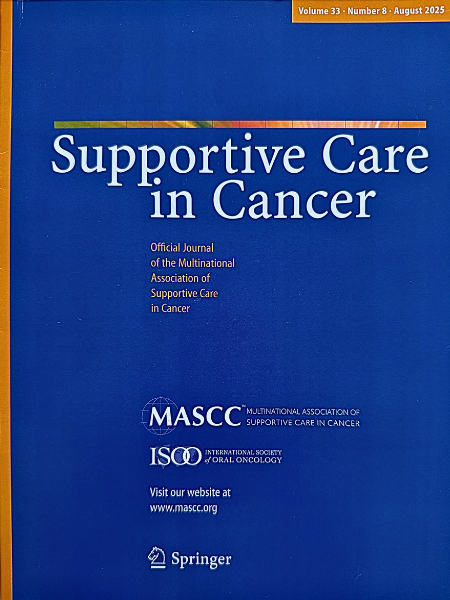
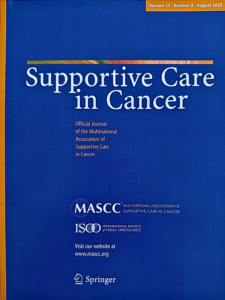
Supportive Care in Cancer
Official Journal of the Multinational Association of Supportive Care in Cancer (MASCC)
Published July 31, 2025
Study Summary: Results from a multi-center, randomized controlled trial demonstrated the Chemo Mouthpiece® significantly reduces the incidence of chemotherapy-induced oral pain and lowers the need for opioids or analgesics, improving patient comfort and treatment adherence. The trial evaluated a reusable oral cryotherapy device designed to help manage chemotherapy-induced oral mucositis (OM).
The study included 164 adult patients across 16 U.S. sites, randomized 2:1 to receive the Chemo Mouthpiece plus best supportive care (BSC) or BSC alone.
Study Results:
- Less pain and reduced duration of analgesic use; opioid use eliminated in device arm
- Used 10 minutes pre-chemo, during infusion, and at home twice daily for 5 days
- Included short and long half-life chemotherapy regimens
- Portable design enabled consistent at-home use and improved efficacy
- 164 patients across 17+ cancer types and 30+ chemotherapy regimens
- No safety issues observed
Pain Reduction
- 46% reduction in oral pain episodes vs. control
- Pain-free 80% of time during peak days vs. 68% with BSC
Opioid / Analgesic Reduction
- 68% reduction in opioid/analgesic use vs. control
- Opioid use eliminated in per-protocol population (Cycle 2)
Patient Feedback
- Well tolerated and easy to use for consistent oral cryotherapy
- 83% of patients would recommend the device
Read the full study in Supportive Care in Cancer
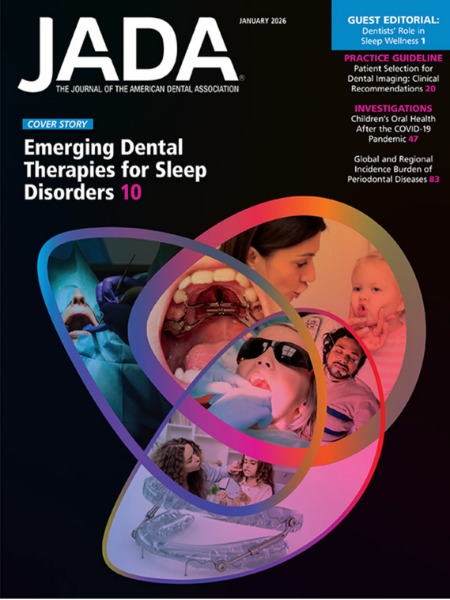
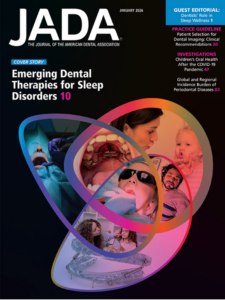
Journal Of The American Dental Association
Published: January 28, 2026
See Case Series Study: Oral mucositis secondary to datopotamab deruxtecan for advanced-stage cancer managed with cryotherapy after topical steroid failure
Summary: Oral mucositis is a clinically meaningful, dose-limiting toxicity commonly seen in Antibody-Drug Conjugate (ADC) therapies. ADC-associated oral mucositis can present early and be debilitating.
A new case study series published in The Journals of the American Dental Association examined patients with TROP2-directed ADC-associated oral mucositis.
This series of cases demonstrated patients treated with this class of ADCs had a favorable outcome with the use of oral cryotherapy, delivered using the Chemo Mouthpiece® medical device.
Read in the Journal Of The American Dental Association
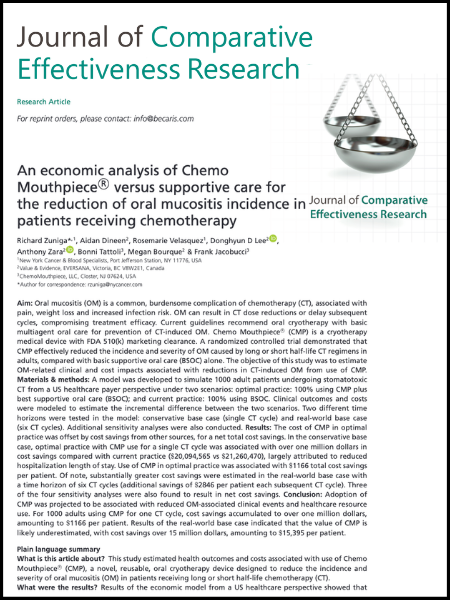
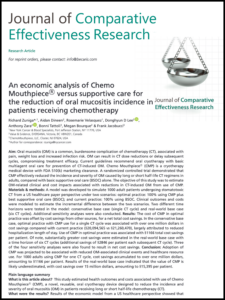
Journal of Comparative Effectiveness Research
Published: February 27, 2026
See Full Study: An economic analysis of Chemo Mouthpiece® versus supportive care for the reduction of oral mucositis incidence in patients receiving chemotherapy
Summary: A newly published, peer-reviewed economic analysis in the Journal of Comparative Effectiveness Research evaluated the Chemo Mouthpiece® medical device alongside best supportive care and modeled outcomes in a cohort of 1,000 patients receiving chemotherapy. The modeled findings point to meaningful reductions in OM-related burden, including:
- 266 fewer hospital days associated with OM-related complications
- 200 fewer patients requiring analgesics
- 0 (Zero) patients in the Chemo Mouthpiece arm required opioid intervention for pain associated with Oral Mucositis in the clinical trial
- 112 fewer patients requiring medications for infection management
These modeled findings reinforce the broader clinical impact of reducing the incidence and severity of oral mucositis, not only for patient experience, but also for overall care delivery.
The study also evaluated the downstream cost implications in a modeled 1,000-patient cohort. The results estimated:
- Approximately $1,166 in cost savings per patient in the first chemotherapy cycle
- Over $1 million in total cost savings at the cohort level
- Reductions in healthcare resource utilization, including hospital length of stay and medication use
- In a modeled real-world base case over six chemotherapy cycles, cost savings were estimated at $15,395 per patient
These modeled outcomes were driven by reductions in the incidence and severity of chemotherapy induced oral mucositis and associated complications.
Notably, the analysis suggests that economic benefits may increase across multiple chemotherapy cycles, reflecting the cumulative burden of OM over time.
Read in the Journal of Comparative Effectiveness Research
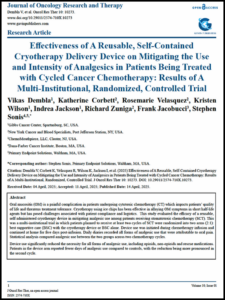
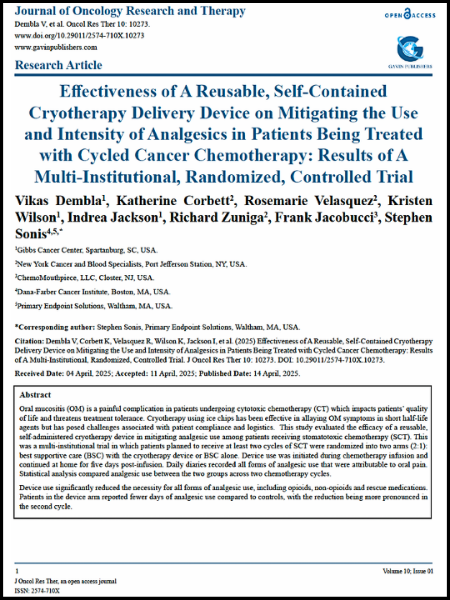
Journal of Oncology Research and Therapy
Study Summary:
A subset analysis of a multi-institutional, randomized controlled study shows that use of the Chemo Mouthpiece® significantly reduced pain and opioid/analgesic use among adult patients receiving chemotherapy for a broad range of cancers.
Key Study Findings:
• 68% reduction in all forms of analgesic use (Chemo Mouthpiece vs. control in the per protocol population).
• 76% reduction in the number of days patients reported using any analgesics for pain (Chemo Mouthpiece vs. control in the per protocol population).
• Use of the Chemo Mouthpiece eliminated opioid use in the per protocol population.
The study provides strong evidence that the Chemo Mouthpiece effectively reduced the need for all forms of analgesics to manage chemotherapy induced oral mucositis associated pain.
Read the full study in Journal of Oncology Research and Therapy